Gleanings of the Week Ending January 10, 2026

The items below were ‘the cream’ of the articles and websites I found this past week. Click on the light green text to look at the article. (Note: I have changed the format to include the date and source of the article.)

11/9/2025 BBC Seated salsa - the miracle movement to help ease back pain – Wow – easy to do and very effective. I might even be able to do it on road trips….increase the likelihood of no back pain when getting out of the car!

12/30/2025 Clean Technica Maryland’s Largest Solar Project Launches, On Old Coal Mine – In Garret County MD – “helping to preserve our region’s natural beauty while creating new economic value for our residents. It’s a win-win for us and the environment.” Goo for them!

12/29/2025 Yale Environment 360 Sea Ice Hits New Low in Hottest Year on Record for the Arctic - The Arctic endured a year of record heat and shrunken sea ice as the world’s northern latitudes continue a rapid shift to becoming rainier and less ice-bound due to the climate crisis. The Arctic is heating up as much as four times as quickly as the global average, due to the burning of fossil fuels, and this extra heat is warping the world’s refrigerator. We can point to the Arctic as a faraway place but the changes there affect the rest of the world.

12/30/2025 Science Daily Why your vitamin D supplements might not be working - Magnesium may be the missing key to keeping vitamin D levels in balance. The study found that magnesium raised vitamin D in people who were deficient while dialing it down in those with overly high levels—suggesting a powerful regulating effect. This could help explain why vitamin D supplements don’t work the same way for everyone and why past studies linking vitamin D to cancer and heart disease have produced mixed results. (I also learned that dark chocolate is a good source of magnesium from this post!)

12/26/2025 National Parks Traveler Visual Guide Reveals Stunning Fossil Discovery at Lake Powell – A visual guide published this year and compiled by paleontology experts within the National Park System offers a fresh look at paleontological resources across the 13 park units in the State of Utah. It is available online here.

12/19/2025 Smithsonian Magazine Flesh-Eating Screwworms Are Creeping Closer to a Comeback in the United States - Roughly 60 years ago, the United States eradicated the New World screwworm, an insect that feeds on living tissue. A concerted effort led by USDA wiped them out by 1966 by releasing sterile male flies and, since female flies only mate once, this strategy helped diminish their numbers until the population collapsed. The agency estimates the eradication of screwworms saves ranchers $900 million per year in lost livestock. But now, the flesh-eating creature appears to be creeping closer to a comeback. Efforts are ramping up to monitor for screwworms and prepare to fight it back again.

12/17/2025 Archaeology Magazine How did the Roman invasion of Britain impact health? - The health of the women and children declined overall during the Roman period, but mainly among those who lived in urban areas. The decline in health in urban areas can be attributed to overcrowding, pollution, limited access to resources, and devastating exposure to lead in Roman infrastructure.

12/17/2926 The Conversation The US already faces a health care workforce shortage – immigration policy could make it worse - America’s health care system is entering an unprecedented period of strain. An aging population, coupled with rising rates of chronic conditions, is driving demand for care to new heights. The workforce isn’t growing fast enough to meet those needs. For decades, immigrant health care workers have filled gaps where U.S.-born workers are limited. Nationally, immigrants make up about 18% of the health care workforce, and they’re even more concentrated in critical roles. Roughly 1 in 4 physicians, 1 in 5 registered nurses and 1 in 3 home health aides are foreign-born.

12/15/2025 Nature Tracing pollution in the lives of Arctic seabirds – Scientists on Svalbard — the largest island of the Norwegian polar archipelago: there used to be sea ice in the fjord in May when we arrived for the start of the season, but we haven’t seen any sea ice since 2009. They are monitoring the presence of polyfluoroalkyl substances (PFASs) in the birds. The years long research has shown that some contaminants transfer to the yolks of the birds’ eggs. High levels of PFASs have been found to lower hatching rates and reduce overall survival rates. In particular, PFASs disrupt hormones and lower fertility rates in male birds.

12/14/2025 The Marginalian A Decalogue for the Dignity of Growing Old: Eva Perón’s Revolutionary Rights of the Elderly – Eva Peron identified 10 rights of elderly people in 1948 to be included in Argentina’s Constitutional Reform the following year; the right to assistance, housing, nourishment, clothing, physical health care, moral health care, recreation, tranquility, and respect.

Gleanings of the Week Ending December 20, 2025

The items below were ‘the cream’ of the articles and websites I found this past week. Click on the light green text to look at the article. (Note: I have changed the format to include the date and source of the article.)

11/30/2025 NPR  More cities are seeing PFAS pollution in drinking water. Here's what Louisville found - What we do is manage risk, and we start that at the river. It sounds weird, but source water protection – keeping the stuff out of the river – is a big deal.

11/25/2025 Artnet Radiant Tiffany Landscape Window Leads Major Auction of the Studio’s Masterpieces – Beautiful glass…there are some coming to auction in December. I enjoyed the pictures in the article.

12/2/2025 Washington Post ‘Everywhere chemicals’ are in our food, decades after scientists recognized dangers - A large body of science has linked phthalates to a variety of serious health conditions, including premature birth and infertility. The costs to society are huge. A 2024 NYU-led study that catalogued health effects from phthalates exposure in the United States — including contributions to diabetes levels and infertility — estimated that dealing with phthalate-related diseases cost $66.7 billion in a single year. Previous Washington Post article on phthalates from last September: The health risks from plastics almost nobody knows about.

12/2/2025 Science Daily Is your gut being poisoned? Scientists reveal the hidden impact of everyday chemicals - Many chemicals designed to act only on one type of target, say insects or fungi, also affect gut bacteria. Some of these chemicals had strong effects. For example, many industrial chemicals like flame retardants and plasticizers -- that we are regularly in contact with -- weren't thought to affect living organisms at all, but they do.

12/7/2025 Clean Technica Your Single-Use Plastic Bottles Are Killing Endangered Sea Turtles - A recent study published in Proceedings of the National Academy of Sciences concludes that plastic ingestion has been documented in nearly 1,300 marine species, including every seabird family, marine mammal family, and sea turtle species. Researchers analyzed data from more than 10,000 autopsies from marine creatures killed by ingesting plastic; they calculated amounts consistent with a 90% likelihood of death:

  • 23 pieces (0.098 cm3/cm) in seabirds;

  • 29 pieces (39.89 cm3/cm) in marine mammals: and,

  • 405 pieces (5.52 cm3/cm) in sea turtles (377 for juveniles).

12/2025 Greenpeace Plastic Merchants of Myth: Circular Claims Fall - After decades of meager investments accompanied by misleading claims and a very well-funded industry public relations campaign aimed at persuading people that recycling can make plastic use sustainable, plastic recycling remains a failed enterprise that is economically and technically unviable and environmentally unjustifiable. (Press release for the document)

12/8/2025 The Conversation PFAS in pregnant women’s drinking water puts their babies at higher risk – Data on all births in New Hampshire from 2010-2019 were analyzed. The 11.5 thousand births that occurred within 3.1 miles of a site known to be contaminated with PFAS and where mothers were served by public water system (well based) were selected for further analysis. PFAS was greater in the water system wells downstream from the site. Births in the area served by wells downstream were 43% more likely to be low-weigh (under 5.5 pounds), 20% greater chance of preterm birth, and 191% greater chance of the infant not surviving its first year. Research was done at University of Arizona.

12/8/2025 Science Daily Humans are built for nature not modern life - Human biology evolved for a world of movement, nature, and short bursts of stress—not the constant pressure of modern life. Industrial environments overstimulate our stress systems and erode both health and reproduction. Evidence ranging from global fertility declines to chronic inflammatory diseases shows the toll of this mismatch.

12/7/2025 Clean Technica The Floating Solar Revolution - Despite this year’s sharp U-turn in federal energy policy, the renewable energy transition continues to branch out in new directions. One emerging factor is the relatively new area of floating solar. The field has already begun to scale up in some regions around the world, and innovative solar firms are carving out new opportunities here in the US as well.

12/7/2025 Science Daily New moonquake discovery could change NASA’s Moon plan - Scientists have discovered that moonquakes, not meteoroids, are responsible for shifting terrain near the Apollo 17 landing site. Their analysis points to a still-active fault that has been generating quakes for millions of years. While the danger to short missions is low, long-term lunar bases could face increasing risk. The findings urge future planners to avoid building near scarps and to prioritize new seismic instruments.

Gleanings of the Week Ending November 29, 2025

The items below were ‘the cream’ of the articles and websites I found this past week. Click on the light green text to look at the article.

Everyday microplastics could be fueling heart disease - Microplastics—tiny particles now found in food, water, air, and even human tissues—may directly accelerate artery-clogging disease, and new research shows the danger may be far greater for males.

The Mystery of the Mast Year - Every few years, certain species of trees seem to go buck wild, dropping an extraordinary quantity of nuts, seeds, or fruits all at once. What’s more, this bumper crop tends to extend across vast geographical ranges, so that a white oak in Central Park is shedding buckets of acorns at the same time as a white oak in the Shenandoah Valley. Not all trees mast, but many species dominant in American forests do, such as oak, hickory, beech, and dogwood.

Ultra-processed foods quietly push young adults toward prediabetes - More than half of the calories people consume in the United States come from ultra-processed foods (UPFs), which include items such as fast food and packaged snacks that tend to contain large amounts of sodium, added sugars and unhealthy fats.

Why Should We Avoid Heating Plastic? - When plastic is heated, its molecules will move around more freely and the whole structure will become less rigid. This makes it easier for those additives to detach and migrate into nearby foods or liquids. To reduce your exposure, heat food in containers made of inert materials like ceramic or glass, avoid storing hot, fatty, or acidic food in plastic, and try to shorten the storage time of all food and beverages in plastic containers.

'They're just so much further ahead': How China won the world's EV battery race - In 2005, China only had two EV battery manufacturers. Twenty years later, it produces more than three-quarters of the world's lithium-ion cells. Today, China dominates the production at every stage of the battery supply chain, apart from the mining and processing of some raw minerals.

Obesity-Related Cancers Are Rising in Young and Old - Six of cancers—leukemia, thyroid, breast, colorectal, kidney, and endometrial—increased in prevalence in young adults in at least 75 percent of the examined countries. However, five of these six cancers also showed increased prevalence in older adults. Colorectal cancer was the exception. The cancer types with increased incidence in both younger and older adults were all linked to obesity.

Growth of Wind and Solar Keeping Fossil Power in Check - This year it is projected that new wind and solar power will more than meet growing demand for electricity globally, keeping fossil fuel consumption flat. However, while the world is beginning to keep emissions from power plants in check, overall emissions continue to tick up, rising by 1.1 percent this year.

Researchers Discover ‘Death Ball’ Sponge and Dozens of Other Bizarre Deep-Sea Creatures in the Southern Ocean - Researchers have discovered 30 previously unknown deep-sea species in the remote ocean surrounding Antarctica - an achievement highlighting just how little humanity knows about some of the deepest regions of the planet. Fewer than 30 percent of the expedition’s samples have been assessed thus far so there could be more discoveries to report soon.

Short-Chain PFAS Eclipse Their Longer Counterparts in Blood Serum - The conventional wisdom is that short-chain PFAS are of lesser concern because they don’t bioaccumulate, but what we’re seeing is that they can occur at high levels in people. A new study shows that young adults who ate more UPFs also showed signs of insulin resistance, a condition in which the body becomes less efficient at using insulin to manage blood sugar.

Get Up Close with Alabama’s Rivers – Mac Stone photographing Alabama’s waterways…places full of biodiversity. The post includes pictures: southern dusky salamander, pitcher plant blooms, alligator snapping turtles, swamp lily, brown pelican.

Gleanings of the Week Ending July 3, 2021

The items below were ‘the cream’ of the articles and websites I found this past week. Click on the light green text to look at the article.

Top 25 birds of the week – June 2021! – The first picture startled me – a bird with a turquoise beak!

Beach Safety Tips: How To Avoid Being Bitten or Stung This Summer – I’m don’t go to the beach frequently…and then am usually more interested in shells and ghost crabs than being in the water! Still – the safety tips were interesting.

Concrete: The material that defines our age – With the collapse of the reinforced concrete building in Florida….this story seemed particularly timely.

Edible Cholera vaccine made of powdered rice proves safe in phase 1 human trials, study suggests – Reminded me of distribution ease of the polio vaccine sugar cubes back in the 1960s. In this case the special rice is powdered and sealed in aluminum packets that are then mixed with 1/3 cup liquid and drunk. Hopefully, the subsequent phases of the trials will be successful…it could save a lot of lives.

Yellowstone and Warming: An Iconic Park Faces Startling Changes – A few degrees makes a big difference….in National Parks too.

Scientists Find Toxic ‘Forever Chemicals’ in More Than 100 Popular Makeup Products – I hope manufacturers of makeup will check their ingredients more carefully….make their products PFAS-free.

Canada is right to classify single-use plastics as toxic – I hope the US takes similar action. Industry should get on board with this idea and be innovative rather than taking legal action.  There is no ‘responsible plastic use’ for single use plastic. We consumers are too accepting that single use plastics are inevitable. It’s pretty easy for us to avoid singe use plastic bags, straws, stirring sticks, six-pack rings, plasticware….the one that is challenging for me is the hard-to-recycle food containers because of the lack of options in grocery stores and restaurant takeout.

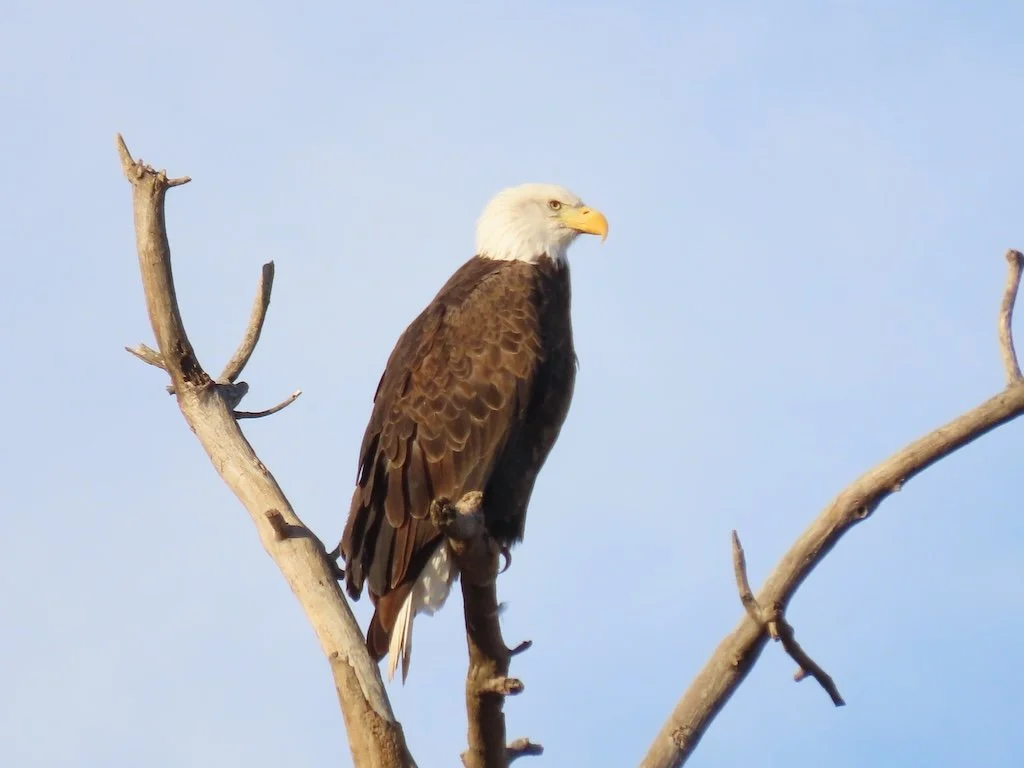
Move Over Bald Eagle: Meet 12 of the World’s Coolest National Birds – Some are flashy…some are majestic….a little history of how they were selected aa representatives for their country.

Losing Ladybugs – Native and non-native ladybugs….you are more likely to see the non-natives now.

Florida’s Manatees Are Dying at an Alarming Rate – Starving because water pollution (nutrient runoff causing algal blooms) smothers seagrass. More than 10% of the manatee population of Florida has died so far in 2021. Very sad for other aquatic species that need the same habitat … and people too.